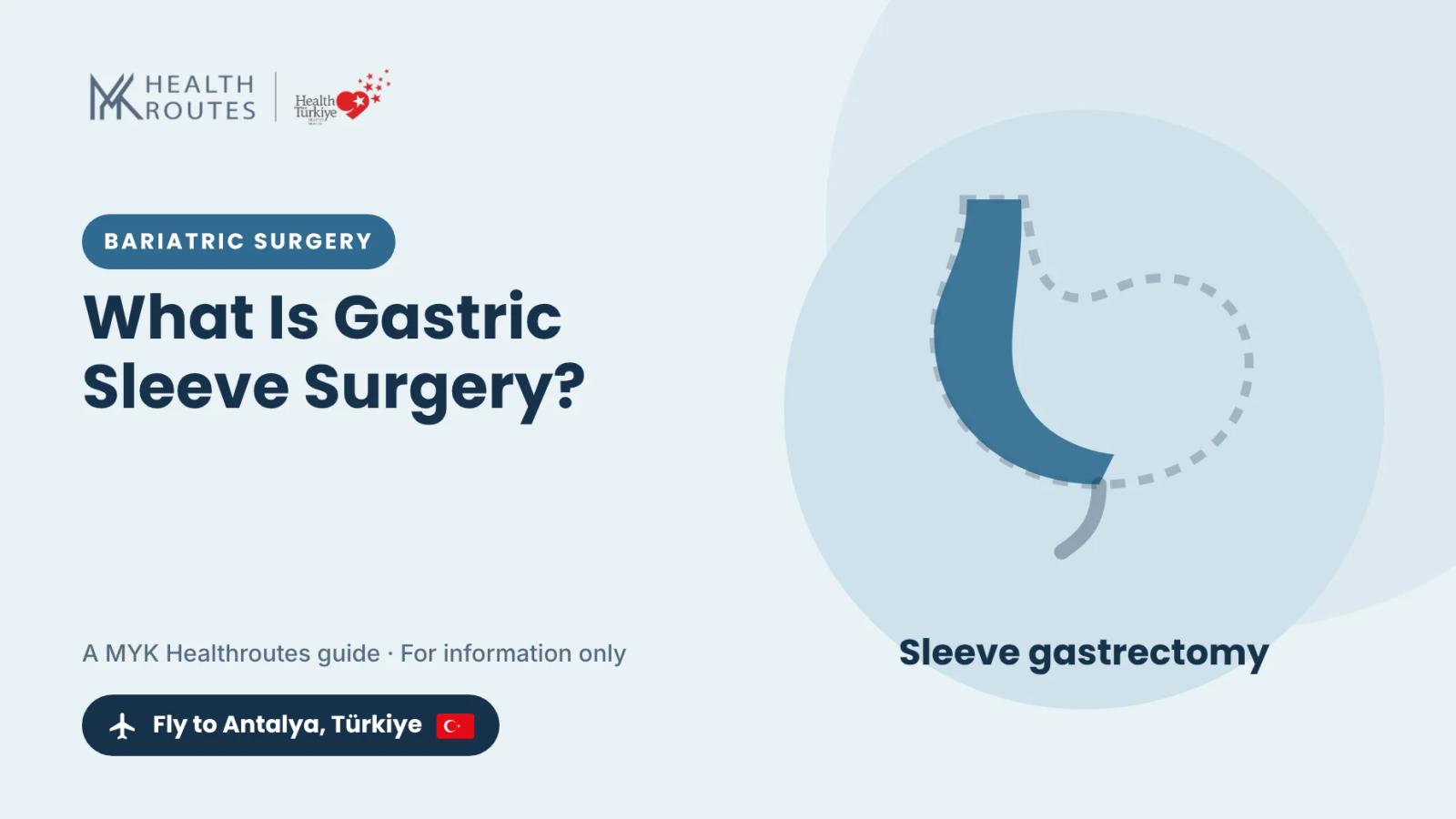
A gastric sleeve, or sleeve gastrectomy, is a weight loss operation. The surgeon removes a large part of the stomach and leaves a narrow, tube-shaped "sleeve". It is permanent and works alongside lasting changes to how you eat and move. A surgeon decides whether it suits you after a full assessment.
How does gastric sleeve surgery work?
The surgeon removes around three-quarters of the stomach, usually by keyhole (laparoscopic) surgery under general anaesthetic. You feel full sooner, and because the removed part makes most of the hunger hormone ghrelin, many people find their appetite drops.
Unlike a gastric bypass, nothing is rerouted. Food takes its normal path with less space. The stomach is divided and sealed with a surgical stapler, and the operation cannot be reversed.
Some surgeons also offer a single-incision version (SILS sleeve) through one small cut.
Who is eligible for a gastric sleeve?
In the UK, NICE guidance generally considers weight loss surgery for adults with a BMI of 40 or more, or a BMI between 35 and 40 with a significant obesity-related condition such as type 2 diabetes or high blood pressure. Lower thresholds may be considered for recent-onset type 2 diabetes.
BMI is only the starting point. Surgeons will also want to know about:
- your medical history, current medicines and previous operations
- whether you have tried non-surgical weight management
- reflux symptoms, because a sleeve can make existing reflux worse
- whether you are ready to follow a long-term diet plan and take supplements for life
- your general fitness for anaesthesia
How does a gastric sleeve compare with a gastric bypass?
A sleeve makes the stomach smaller. A bypass also reroutes part of the small intestine. With significant reflux, a bypass is often preferred; a sleeve is technically simpler and keeps the normal food path.
| At a glance | Gastric sleeve | Gastric bypass (Roux-en-Y or mini) |
|---|---|---|
| What changes | Most of the stomach is removed | Small stomach pouch connected to the small intestine |
| Food path | Unchanged | Part of the intestine is bypassed |
| Reversible | No | Technically possible, but rarely done |
| Reflux | May start or worsen | Often considered when reflux is a concern |
| Nutrient absorption | Mostly unchanged | Reduced; closer monitoring needed |
| Typical hospital stay (MYK package) | 2 nights | 2–3 nights |
| Lifelong supplements | Yes | Yes |
There is more on each operation on our gastric sleeve in Antalya and gastric bypass in Antalya pages.
What are the risks of gastric sleeve surgery?
All surgery carries risks. In the first days and weeks, the main ones are bleeding, infection, blood clots and a leak from the staple line. Later on, people can develop new or worse reflux, narrowing of the sleeve, gallstones during rapid weight loss, and vitamin or mineral deficiencies.
- Staple line leak. Uncommon, but serious. It may need further treatment or another operation.
- Reflux (heartburn). It can appear for the first time after a sleeve. Some people need long-term medication, and a small number need more surgery.
- Nutritional deficiencies. These build up slowly, which is why lifelong supplements and regular blood tests are part of the plan.
- Weight regain. Habits drift over the years, and ongoing support helps.
Results differ between people, and no surgeon can promise a set amount of weight loss.
What is recovery like after a gastric sleeve?
Most people stay in hospital for about two nights and are up walking on the day of surgery. After that comes a staged diet: liquids, then puréed food, then soft food, and normal textures after several weeks. Plenty of people are back at a desk job within two to three weeks, though your surgeon will advise on your own timing.
| Stage | What usually happens |
|---|---|
| Day of surgery | Rest, pain relief, short walks to reduce clot risk |
| Days 1–2 | Clear fluids, checks by the surgical team, discharge if recovering well |
| Week 1 | Liquid diet, rest at your hotel, follow-up review before flying home |
| Weeks 2–4 | Gradual move to puréed and soft foods |
| From about week 4–6 | Slow return to normal textures, small portions |
| Ongoing | Daily supplements, regular blood tests, long-term follow-up |
Why do some UK patients choose Türkiye for a gastric sleeve?
Shorter waiting times and access to experienced bariatric surgeons are the usual reasons. You still need a proper pre-assessment, time to recover before flying, a clear aftercare plan at home, and to know exactly who will operate.
Before you book, ask:
- what the surgeon's specialty is and how much bariatric surgery they do
- whether the hospital and the agency are licensed in Türkiye
- which tests are done before surgery, and who reviews them
- how long you will stay after surgery before flying
- who you contact if something worries you once you are back in the UK
How MYK Healthroutes can help
MYK Healthroutes is a licensed health tourism agency in Antalya, Türkiye, coordinating bariatric, plastic, dental, hair and dermatology treatment for international patients. We are not a hospital: an independent, licensed surgeon at a partner hospital carries out your operation, and the sleeve package covers 2 nights in hospital, 7 nights in a hotel, VIP airport transfers and 2-year aftercare. You can meet our doctors, read how we work, or Message us on WhatsApp to request a medical review.
Frequently asked questions
Is a gastric sleeve permanent?
Yes. The removed part of the stomach is taken out of the body, so the operation cannot be undone. A sleeve can sometimes be converted to a bypass later, but that is a separate operation with its own risks.
How long do I need to stay in Antalya after a gastric sleeve?
The MYK gastric sleeve package includes 2 nights in hospital and 7 nights in a hotel. That gives you time for early recovery and a review before you fly. Your surgeon will confirm when you are fit to travel.
Will I need to take vitamins for life?
Yes. Most people need daily vitamin and mineral supplements for life after a sleeve, plus regular blood tests. Your surgical team will tell you which ones to take.
What decides my personalised quote?
The procedure your surgeon recommends, any extra tests and how long you stay. We set it all out in writing first.