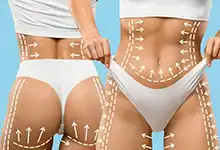

Tummy tuck and liposuction are two of the most commonly considered body contouring procedures, but they are designed to address different concerns. Although both can improve the appearance of the abdominal area, the way they work — and the problems they can correct — are not the same.
What Is Liposuction?
Liposuction is a surgical procedure designed to remove localised deposits of excess fat from specific areas of the body. It can be performed on the abdomen, waist, hips, thighs, arms and several other areas. The procedure is primarily intended for body c
The procedure is primarily intended for body contouring rather than significant weight loss. People considering liposuction generally have relatively good skin elasticity but struggle with areas of fat that remain despite diet and exercise.
What Is a Tummy Tuck?
A tummy tuck, medically known as abdominoplasty, addresses more than excess fat.
During the procedure, excess abdominal skin can be removed and, when necessary, weakened or separated abdominal muscles can be repaired. The remaining skin is then repositioned to create a firmer abdominal contour.
This can be particularly relevant after:
- Pregnancy
- Significant weight loss
- Age-related changes
- Previous fluctuations in body weight
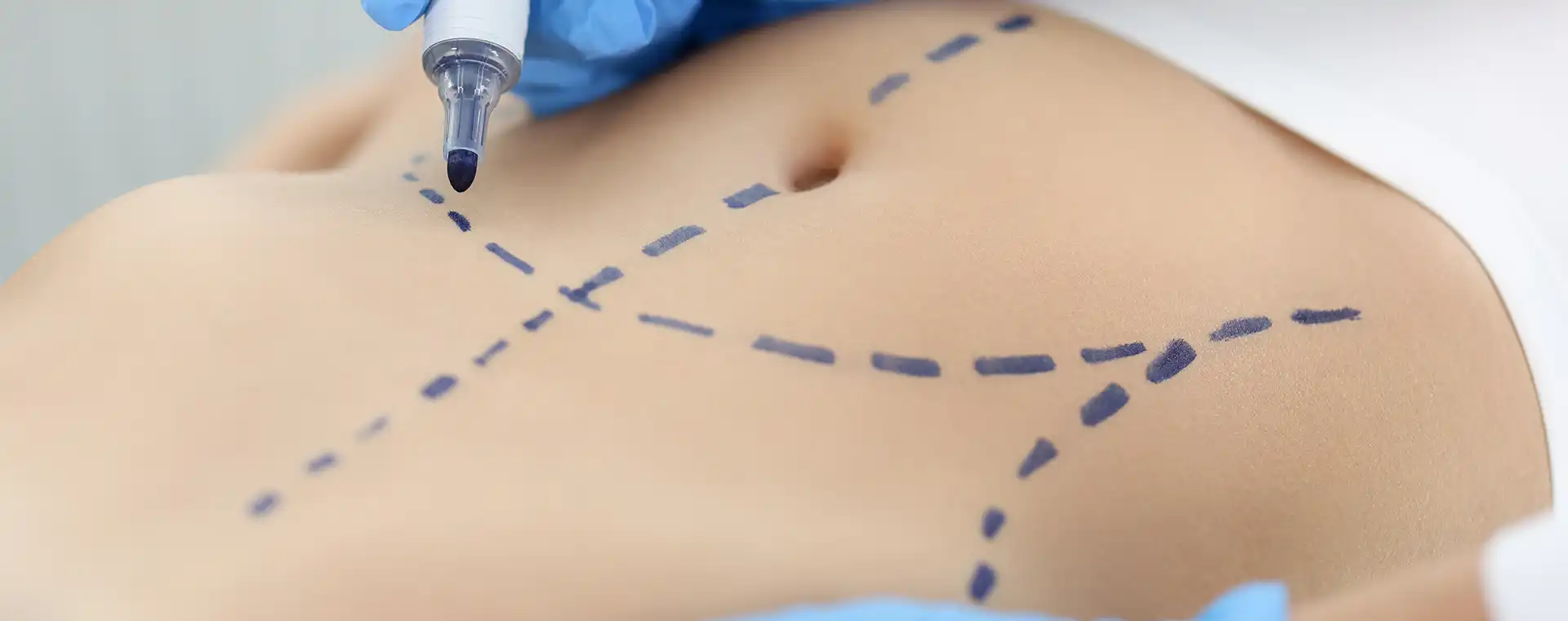
Tummy Tuck vs Liposuction: The Main Difference
The simplest distinction is the type of tissue each procedure is designed to address.
Liposuction primarily removes excess fat.
Tummy tuck primarily addresses loose skin and the abdominal wall, while excess fat may also be treated when appropriate.
For someone with good skin elasticity and isolated abdominal fat, liposuction alone may be considered. If significant loose skin or abdominal muscle separation is present, a tummy tuck may be more appropriate.
Treatment should be selected according to the patient’s anatomy rather than the name of the procedure. The amount of excess skin, fat distribution and condition of the abdominal wall all need to be evaluated before deciding on a surgical plan.